COVID
Origins

Reviewed November 2026

COVID Origins

What the record shows, and what it doesn't.

Where did the virus come from, and what happened next? This file sets out what is known about the origins of COVID-19 and the response that followed, and marks each contested point by how well the evidence holds up.

  • DocumentedOn the public record: a transcript, a statute, an official count.
  • DisputedCredible evidence points more than one way.
  • UnsupportedRepeated often, but the evidence is not there.
Wuhan reports a pneumonia clusterGenome shared with the worldWHO declares a global emergencyPandemic declared15 Days to Slow the SpreadCalifornia orders residents to stay homeCARES Act signedCDC recommends masksFirst U.S. vaccine authorisedGlobal emergency ends
01

Where the virus came from

Nobody has proven it. Two explanations are taken seriously by investigators, a third is raised by some, and the early data that could settle the question has never been shared by China. This section is a summary; primary records are in the Documents section.

Natural spillover

The virus passed from an infected animal to people, most likely through the wildlife trade at a market in Wuhan. Earlier coronavirus outbreaks, SARS and MERS, both reached people this way.

What is missing: no infected animal has ever been identified.

Research-related incident

The virus reached people through an accident connected to coronavirus research in Wuhan, the city where the outbreak began and home to a major virology institute.

What is missing: no record shows the virus in any lab before the outbreak.

The “Proximal Origin” paper

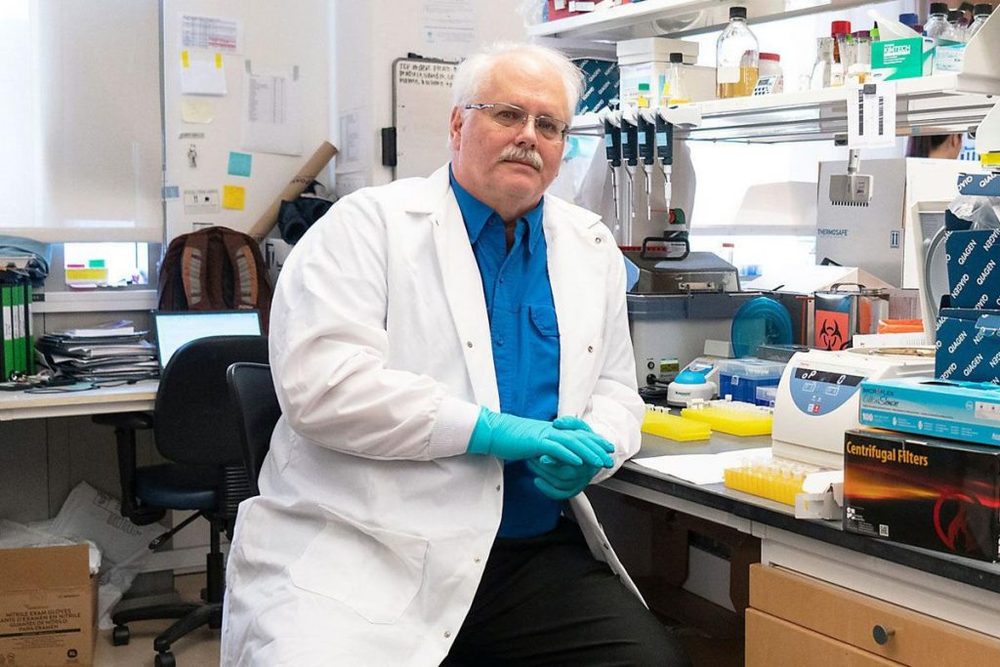
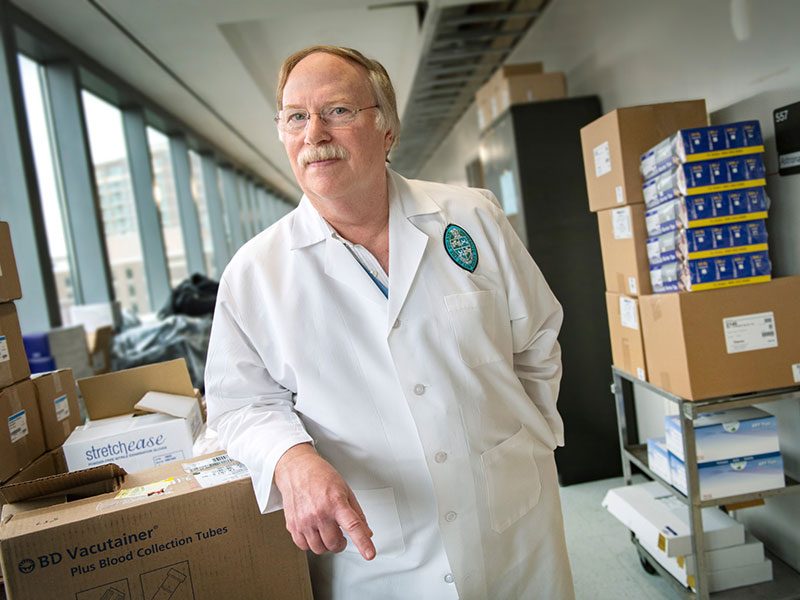
Five virologists published “The proximal origin of SARS-CoV-2” in Nature Medicine on 17 March 2020: Kristian Andersen, Andrew Rambaut, Ian Lipkin, Edward Holmes and Robert Garry. It became the most influential scientific statement on where the virus came from, and the most argued over.

Read the paper

  • What it said

    Documented The authors concluded the virus was not engineered and wrote that “we do not believe that any type of laboratory-based scenario is plausible.” Officials and news outlets cited it for years as having settled the question.

  • What the authors said in private

    Documented Emails and chat messages released by Congress in 2023 show that days before drafting it, several authors thought a lab origin was possible or even likely. Andersen had told Fauci on 31 January 2020 that parts of the genome looked potentially engineered.

  • Who was involved behind the scenes

    Documented The paper grew out of a 1 February 2020 conference call organised by Jeremy Farrar of the Wellcome Trust and joined by Fauci and NIH director Francis Collins. None of the three was named as an author. Fauci later cited the paper from the White House podium.

  • Why the authors changed their minds

    Disputed Andersen and Garry told Congress in July 2023 that new data changed their view within days, as science is meant to work, and that nobody told them what to conclude. House Republicans concluded the paper was prompted to discredit the lab theory. Democrats on the same panel disagreed.

  • Where it stands

    Critics, including some scientists, have petitioned for a retraction. Nature Medicine has not retracted it. The paper's central claim about a lab origin is now contradicted by three U.S. intelligence agencies and supported by others.

Where U.S. intelligence stands

Eight agencies and the National Intelligence Council have given a view. They are split, and nearly every judgment is held with low confidence. All agree the virus was not developed as a biological weapon.

Research-related incident 3

  • FBI Moderate confidence
  • Department of Energy Low confidence, since 2023
  • CIA Low confidence, since January 2025

Undecided 1

  • One agency Not named

Natural exposure 5

  • National Intelligence Council Low confidence
  • Four agencies Low confidence, not named publicly

Based on the declassified ODNI assessments of 2021 and 2023 and the CIA's January 2025 statement. A WHO scientific advisory group reported in June 2025 that all hypotheses remain open because key data was never provided.

02

The people in the file

Officials and scientists whose decisions or statements come up most often. Appearing here is not an accusation.

National Institutes of HealthThe federal research agency where Anthony Fauci ran one institute, NIAID, and Francis Collins was director. It funded much of the research discussed on this page.

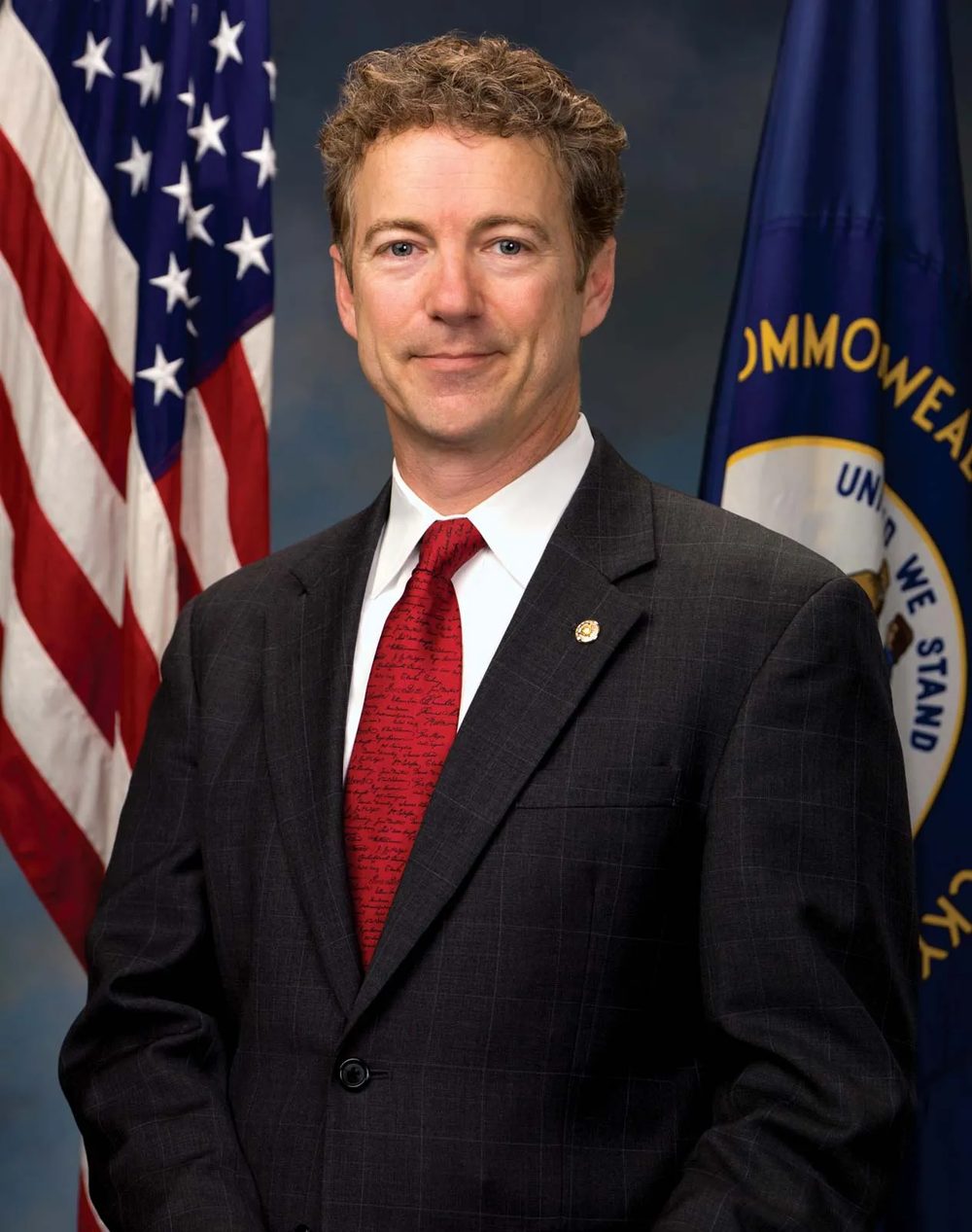
Senator Rand Paul questions Anthony Fauci about the origins of COVID-19 at a Senate hearing. Broadcast footage from NewsNation.
Senator Josh Hawley questions Anthony Fauci at a Senate hearing. Footage from C-SPAN, played from YouTube.
03

Fauci's fame

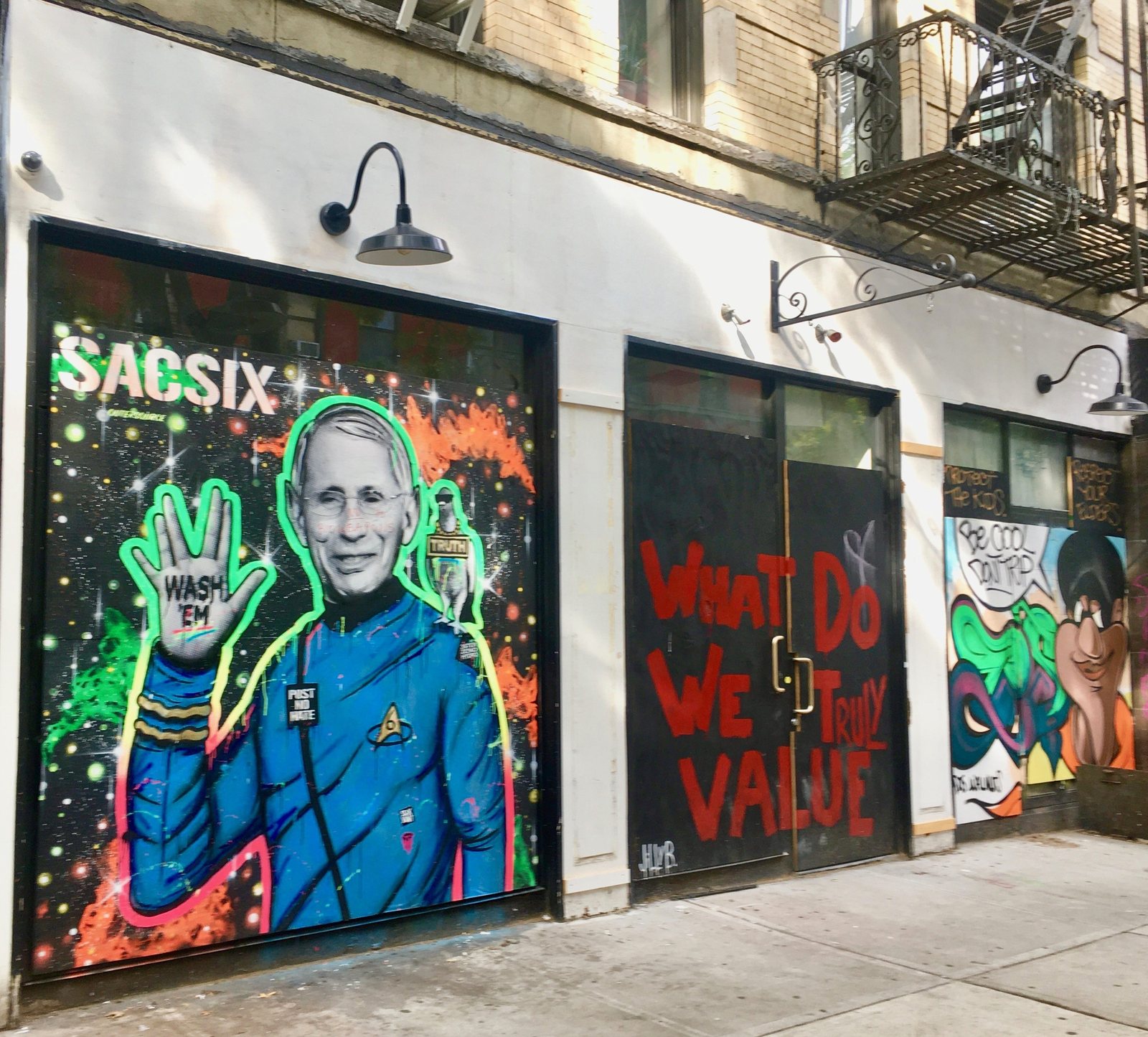
No public-health official in American history became as famous as Anthony Fauci did in 2020. The celebrity made him a trusted voice to some and a target to others, and it became part of the story.

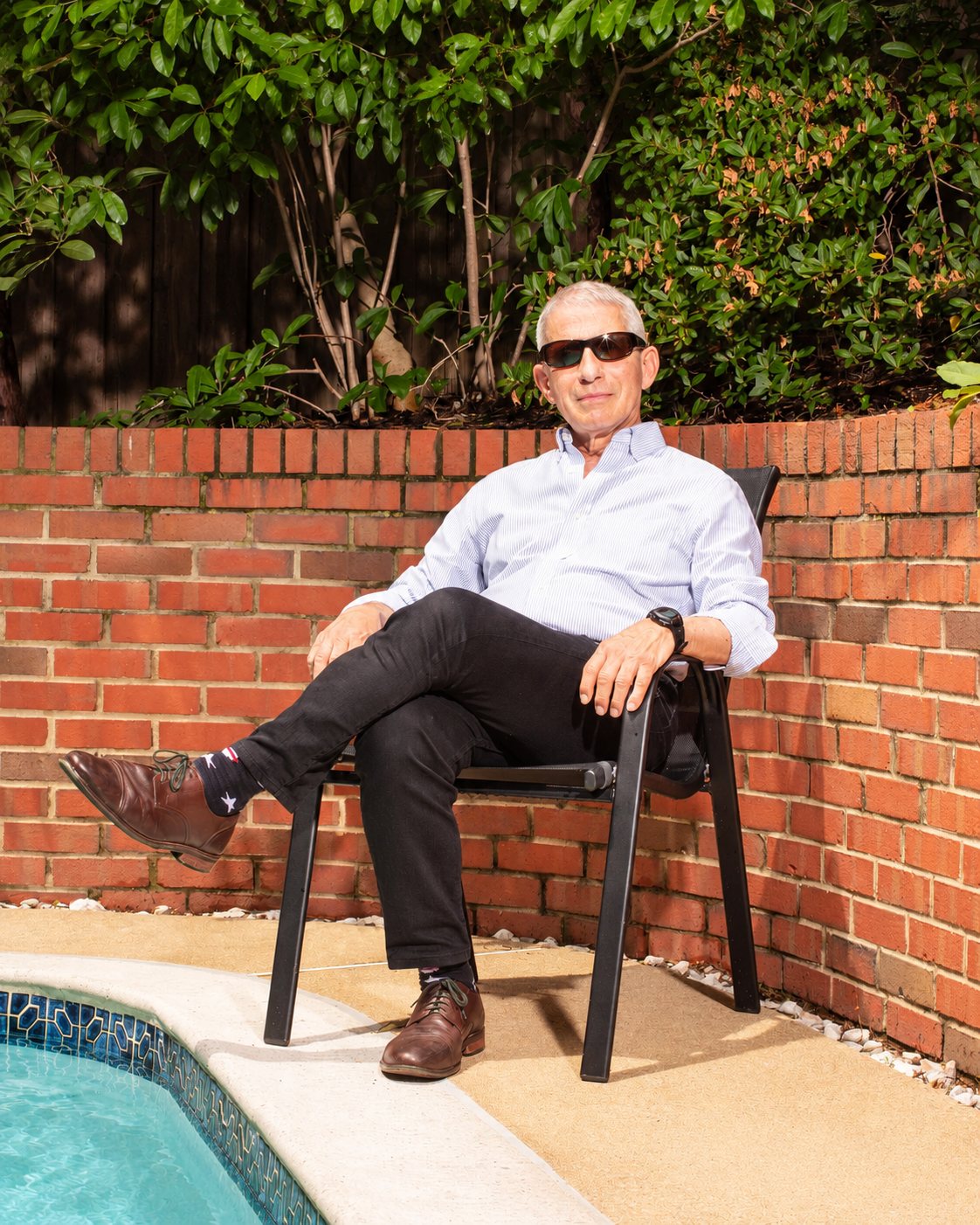
Anthony Fauci in sunglasses and a striped shirt, seated in a chair beside a swimming pool in front of a brick wall
Anthony Fauci, photographed poolside for a magazine cover story in the summer of 2020. Critics pointed to the shoot as a sign that he was enjoying the attention while the country was shut down.
  • A household name in weeks

    The daily White House briefings in March 2020 put a 79-year-old government scientist on television every evening. In polls that spring, roughly three in four Americans approved of the job he was doing.

  • Played by Brad Pitt

    Pitt portrayed him on Saturday Night Live in April 2020 and was nominated for an Emmy for it.

  • Bobbleheads, doughnuts and a record baseball card

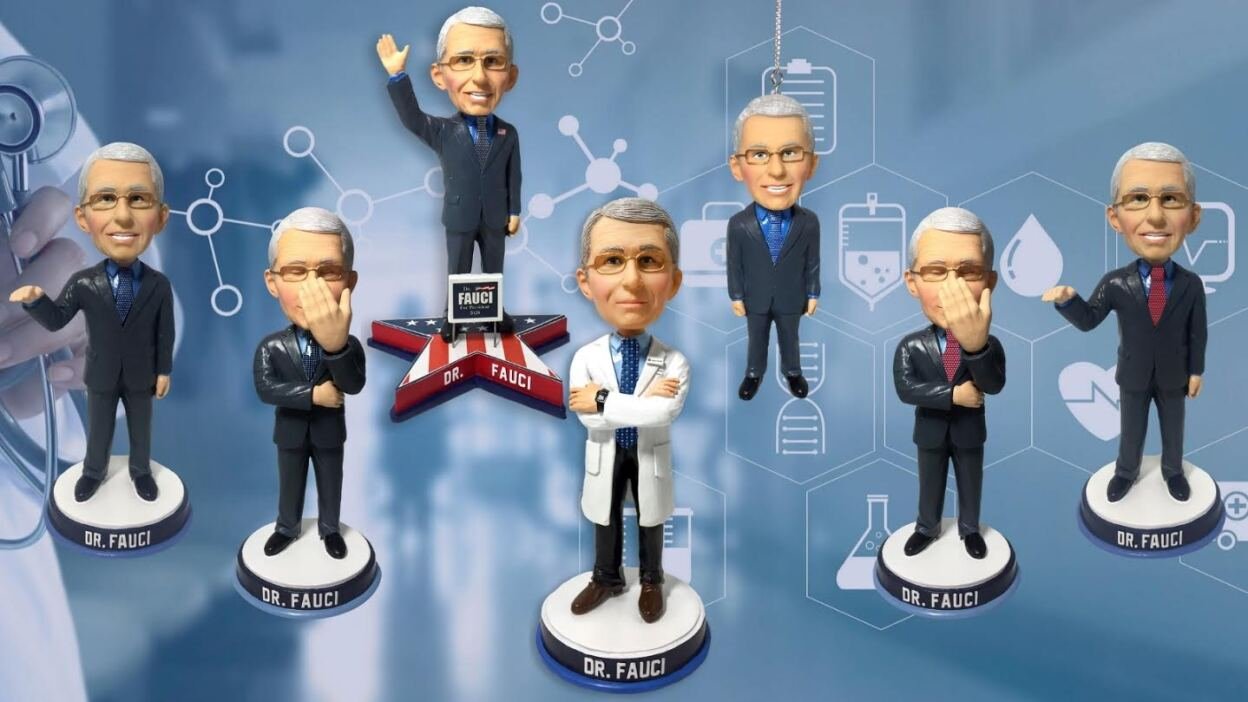
    His face appeared on bobbleheads, candles, socks and doughnuts. He threw the first pitch of the 2020 baseball season, and the trading card of that pitch broke the maker's sales record.

  • Honours

    Time named him a Guardian of the Year for 2020, alongside front-line health workers. In 2021 he won the Dan David Prize, worth $1 million.

  • The highest-paid federal employee

    Documented His salary, above $400,000 a year, exceeded the President's.

  • The backlash

    As the pandemic wore on, opinion of him split sharply along party lines. He was given a security detail after threats against him and his family, and at least one man was sent to prison for making them.

On screen and in print

“Fauci” (2021)

A National Geographic documentary directed by John Hoffman and Janet Tobias, released in cinemas in September 2021 and then on Disney+. It follows him through the pandemic and looks back at his role in the AIDS crisis. Most critics reviewed it favourably. Detractors called it a flattering portrait that skipped the hard questions, and online audience ratings were overwhelmingly negative.

“Dr. Tony Fauci” (2023)

A PBS American Masters film, shot over nearly two years as he finished his government career. The clip below is from it. In June 2024 he followed it with a memoir, On Call, which became a bestseller.

Fauci visits a Washington, D.C., neighbourhood in June 2021 to counter vaccine hesitancy. From the PBS American Masters film “Dr. Tony Fauci”, 7 minutes.
04

Timeline, 2019 to 2025

The outbreak, the response, the vaccines, and the inquiries into how it began. Swipe, drag or use the arrows to move through it.

  1. A doctor warns his colleagues

    Wuhan ophthalmologist Li Wenliang tells fellow doctors about a SARS-like illness. Police reprimand him for spreading rumours. He dies of COVID-19 on 7 February 2020.

  2. Wuhan reports a pneumonia cluster

    City health officials announce cases of pneumonia of unknown cause. The Huanan Seafood Market, linked to many early patients, is closed the next day.

  3. Genome shared with the world

    Chinese scientists release the genetic sequence of the new coronavirus, which lets labs everywhere begin building tests and vaccines.

  4. First confirmed U.S. case

    A man in Washington State who had returned from Wuhan tests positive.

  5. Wuhan is sealed off

    China halts travel in and out of a city of 11 million people. The lockdown lasts 76 days.

  6. White House task force formed

    Initially chaired by Health Secretary Alex Azar.

  7. WHO declares a global health emergency

    Its highest level of alarm, with about 7,800 confirmed cases, nearly all in China.

  8. “Stop buying masks”

    Surgeon General Jerome Adams tells the public masks will not protect them and are needed by health workers.

  9. WHO declares a pandemic

    More than 118,000 cases in 114 countries, and 4,291 deaths.

  10. U.S. national emergency

    President Trump's declaration opens up to $50 billion in federal aid.

  11. “15 Days to Slow the Spread”

    Voluntary federal guidelines: work from home, avoid gatherings of more than ten, skip restaurants and travel.

  12. California orders residents to stay home

    The first statewide order. Most states follow within three weeks.

  13. CARES Act signed

    About $2.2 trillion, the largest economic relief bill in U.S. history.

  14. Fifteen days becomes six weeks

    The federal guidelines are extended through 30 April.

  15. CDC reverses on masks

    The agency recommends cloth face coverings in public.

  16. “Opening Up America Again”

    A three-phase federal reopening plan. Governors set their own timetables.

  17. Operation Warp Speed announced

    A federal programme to fund vaccine development and manufacturing in parallel.

  18. First U.S. vaccine authorised

    The FDA grants emergency use to the Pfizer-BioNTech vaccine. Moderna follows a week later. The first shots are given on 14 December.

  19. WHO and China publish a joint study

    It rates a laboratory incident “extremely unlikely.” The WHO's director-general says the assessment was not extensive enough and that all hypotheses remain open.

  20. Biden orders a 90-day intelligence review

    The declassified summary in August shows agencies divided and no firm conclusion.

  21. Omicron identified

    The variant spreads faster than any before it and causes the largest wave of infections of the pandemic.

  22. Energy Department shifts its view

    It now judges, with low confidence, that a lab-related incident is most likely. The FBI director publicly confirms his agency's similar view.

  23. WHO ends the global emergency

    The U.S. public health emergency expires six days later.

  24. Intelligence report declassified

    Released under the COVID-19 Origin Act, which Congress passed without a dissenting vote. It leaves the question open.

  25. Fauci testifies in public

    He tells a House panel that a lab origin is not in itself a conspiracy theory, and rejects the charge that he suppressed it.

  26. House subcommittee final report

    The Republican-led panel concludes a lab-related origin is most likely. Its Democratic members publish a dissent saying the evidence does not settle it.

  27. CIA leans toward a research-related origin

    The agency says so with low confidence and that both scenarios remain plausible.

  28. WHO advisers: still unresolved

    The scientific advisory group says it cannot rule any hypothesis in or out without data China has not supplied.

05

The White House task force

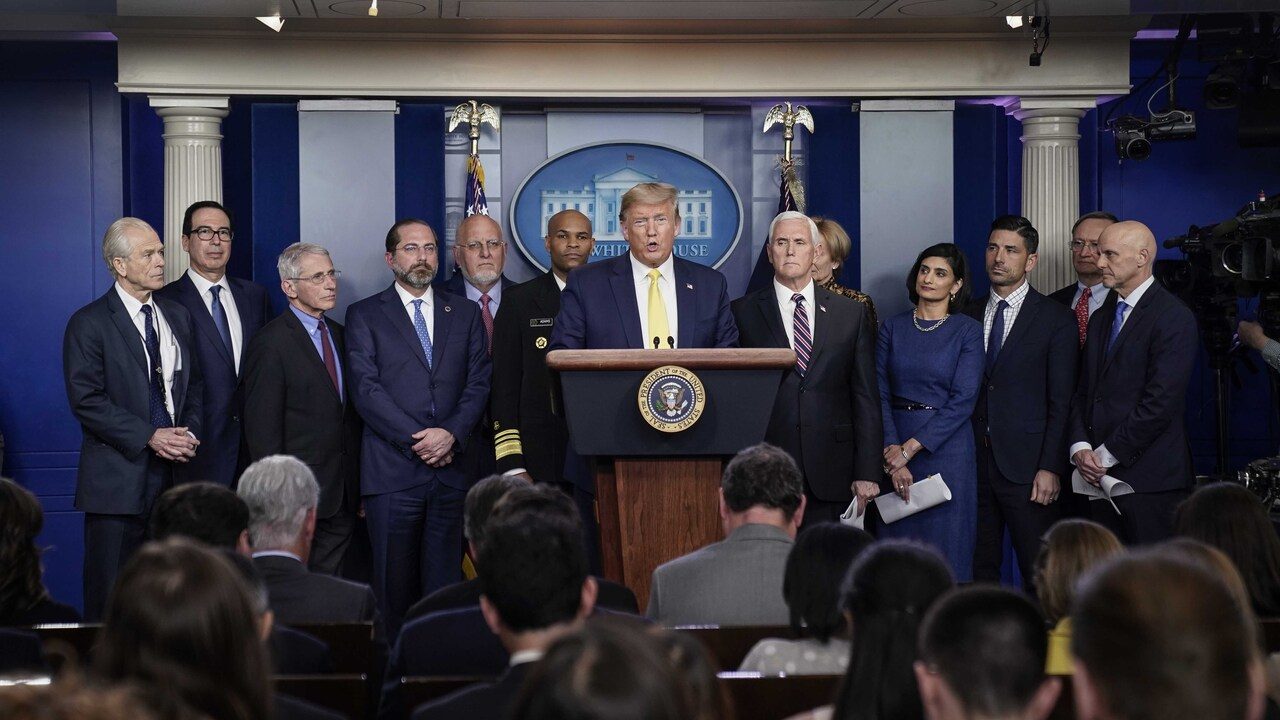
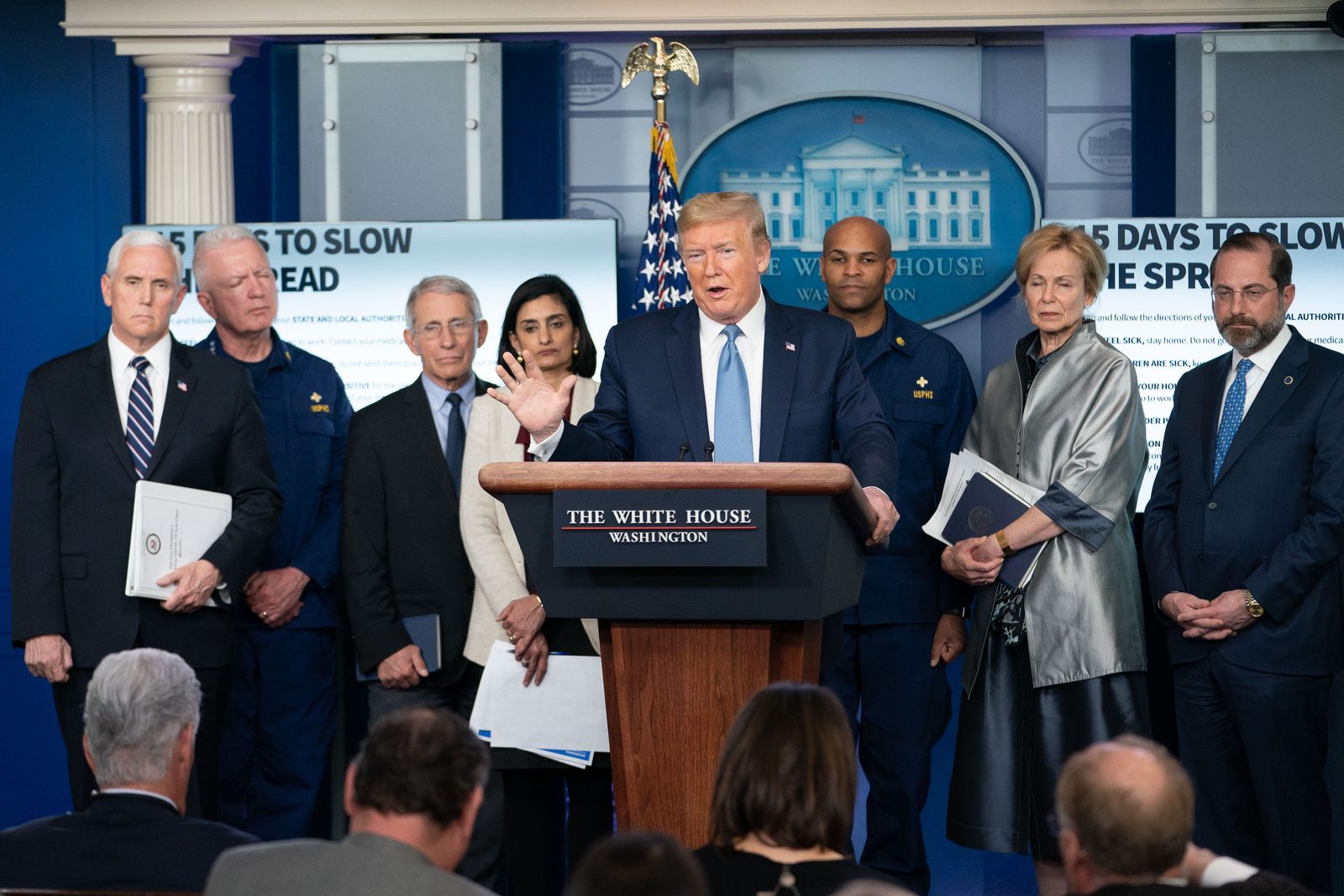
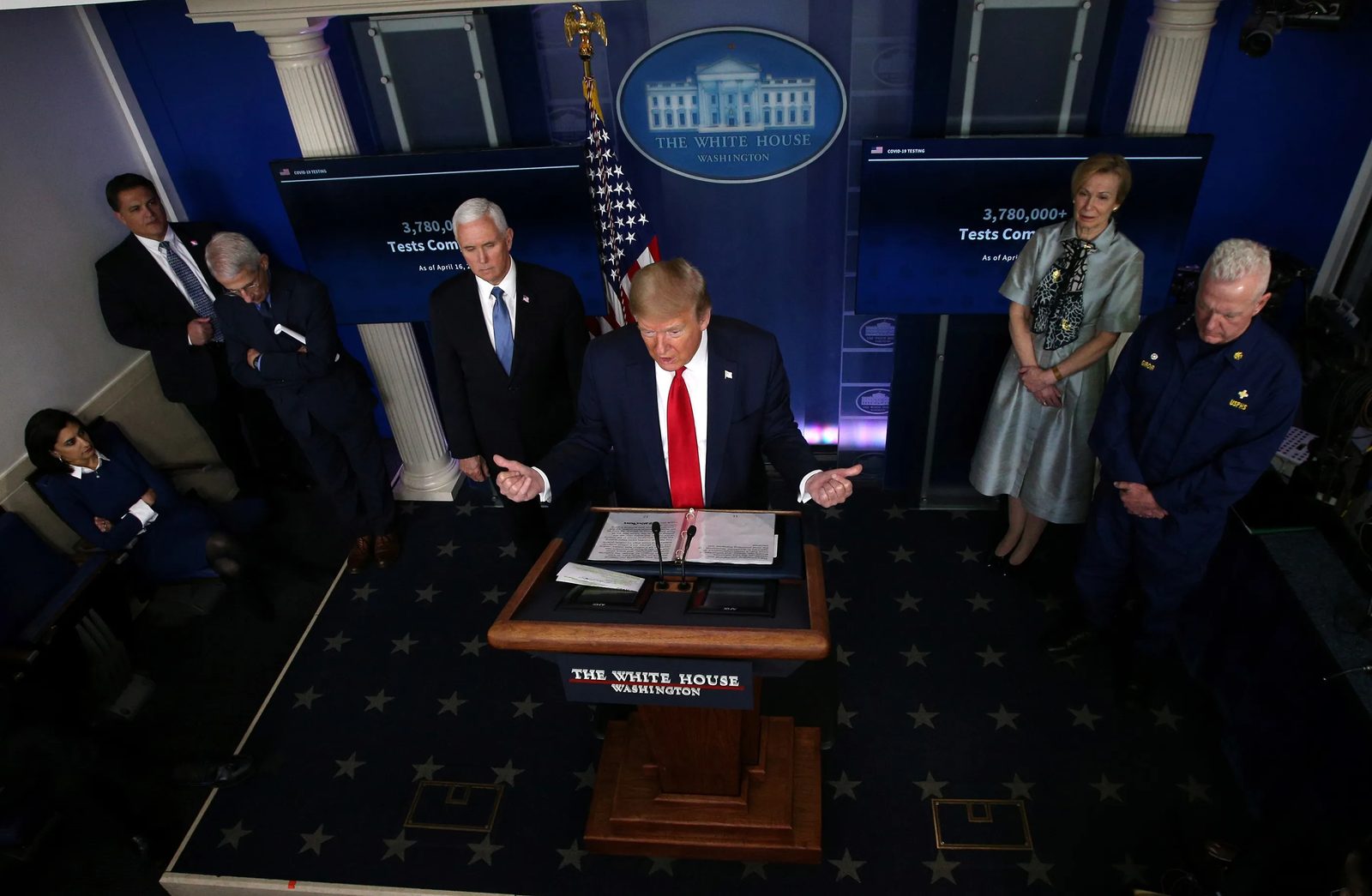
For much of 2020 a televised daily briefing was how Americans heard federal policy. The task force advised; governors and local officials issued the orders.

Who sat on it

  • Mike PenceVice President. Chair from 26 February 2020.
  • Alex AzarHealth Secretary. The first chair.
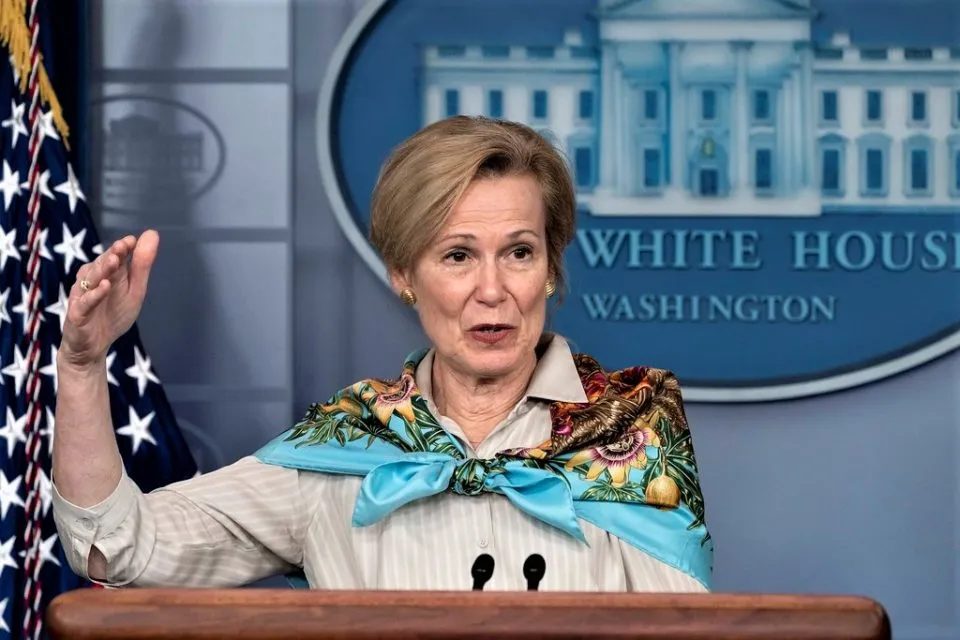
  • Deborah BirxResponse coordinator. Ran data and state outreach.
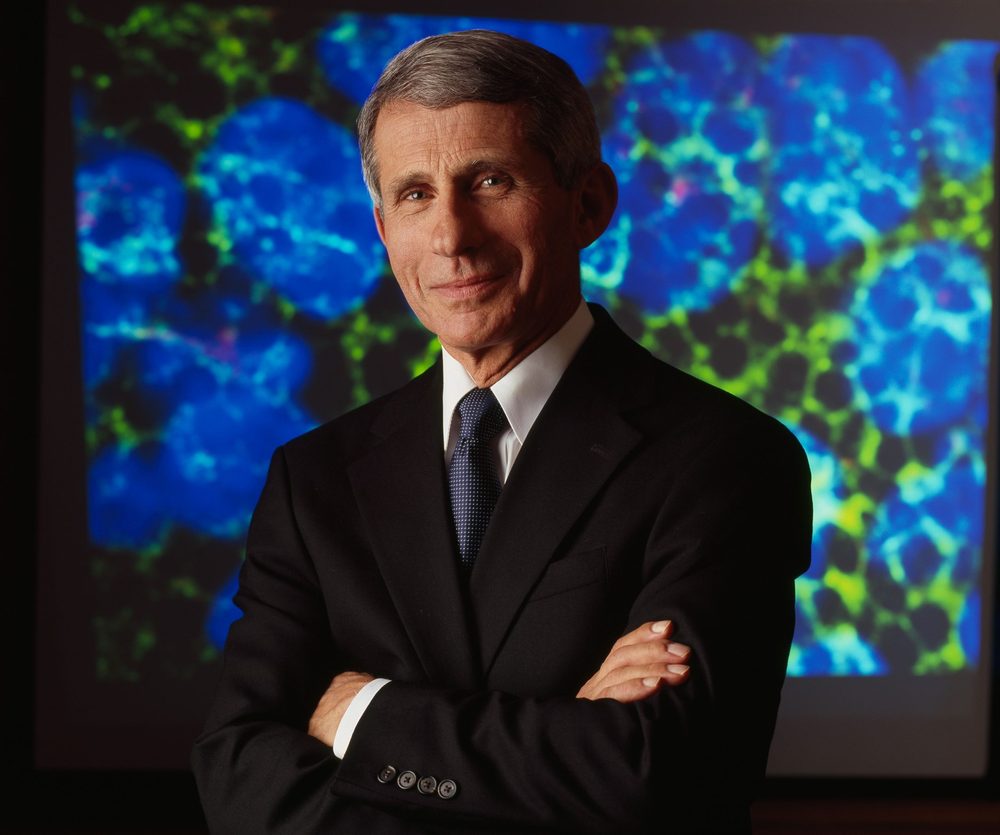
  • Anthony FauciDirector of NIAID. The best-known medical voice.
  • Robert RedfieldDirector of the CDC.
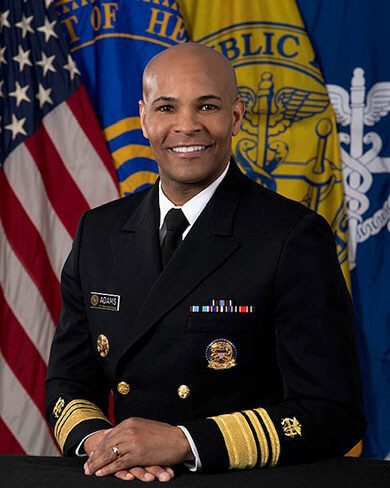
  • Jerome AdamsSurgeon General. Led public messaging.
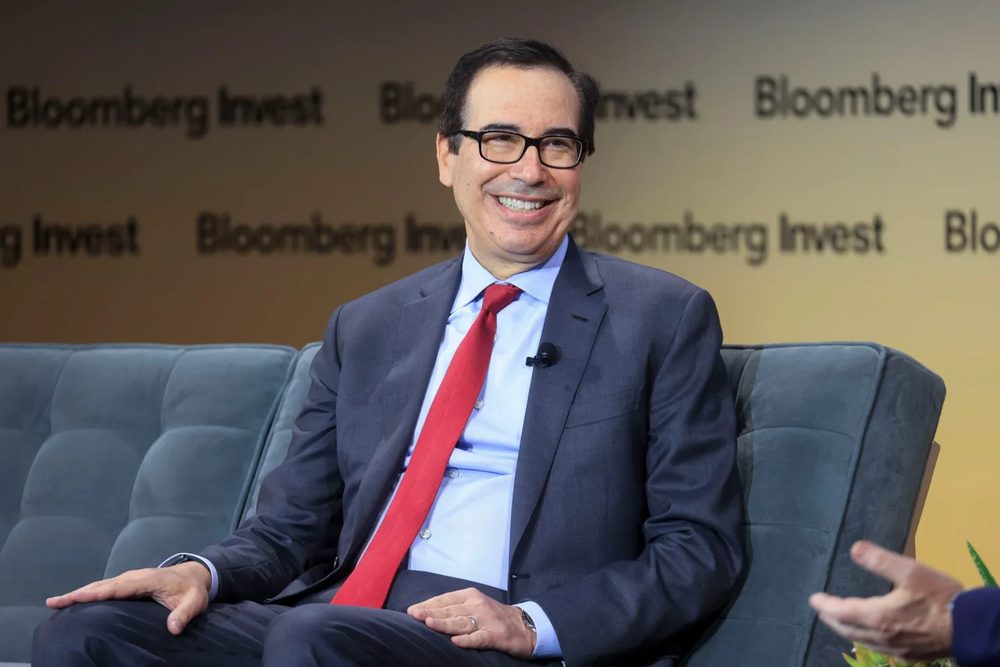
  • Steven MnuchinTreasury Secretary. Oversaw economic relief.
  • Seema VermaMedicare and Medicaid administrator.
  • Stephen HahnFDA Commissioner.

Decisions that mattered

  1. The 15-day guidelines

    Presented as a two-week effort. Birx later wrote in her memoir that she was working out how to extend them almost as soon as they were approved.

  2. The projection

    Birx and Fauci present models showing 100,000 to 240,000 U.S. deaths even with distancing. The eventual toll passes 1.2 million.

  3. The mask reversal

    Five weeks after officials told the public not to buy masks, the CDC recommends wearing them.

  4. Reopening in phases

    Federal criteria for reopening are published. States largely go their own way.

  5. Daily briefings stop

    They resume briefly on 26 June as cases climb across the South and West.

  6. The President tests positive

    Several White House staff and guests at a Rose Garden event are also infected.

How two weeks grew

15 days to slow the spread

The original 15 days, 16 to 30 MarchThe extension, to 30 April

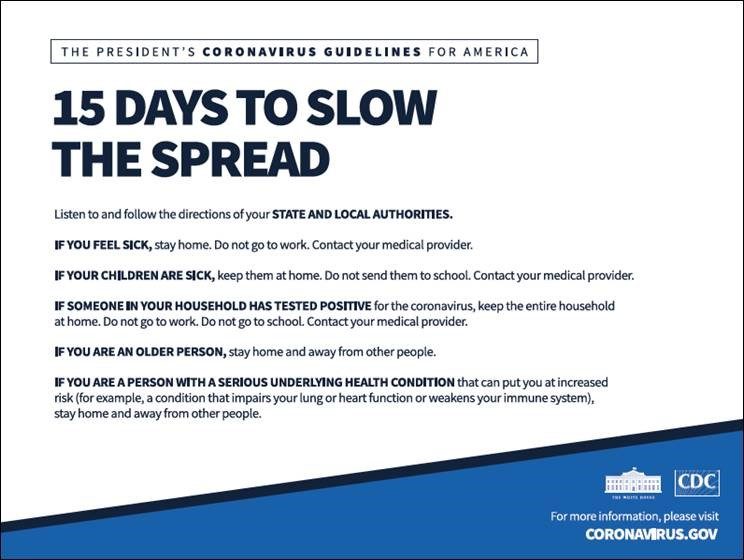
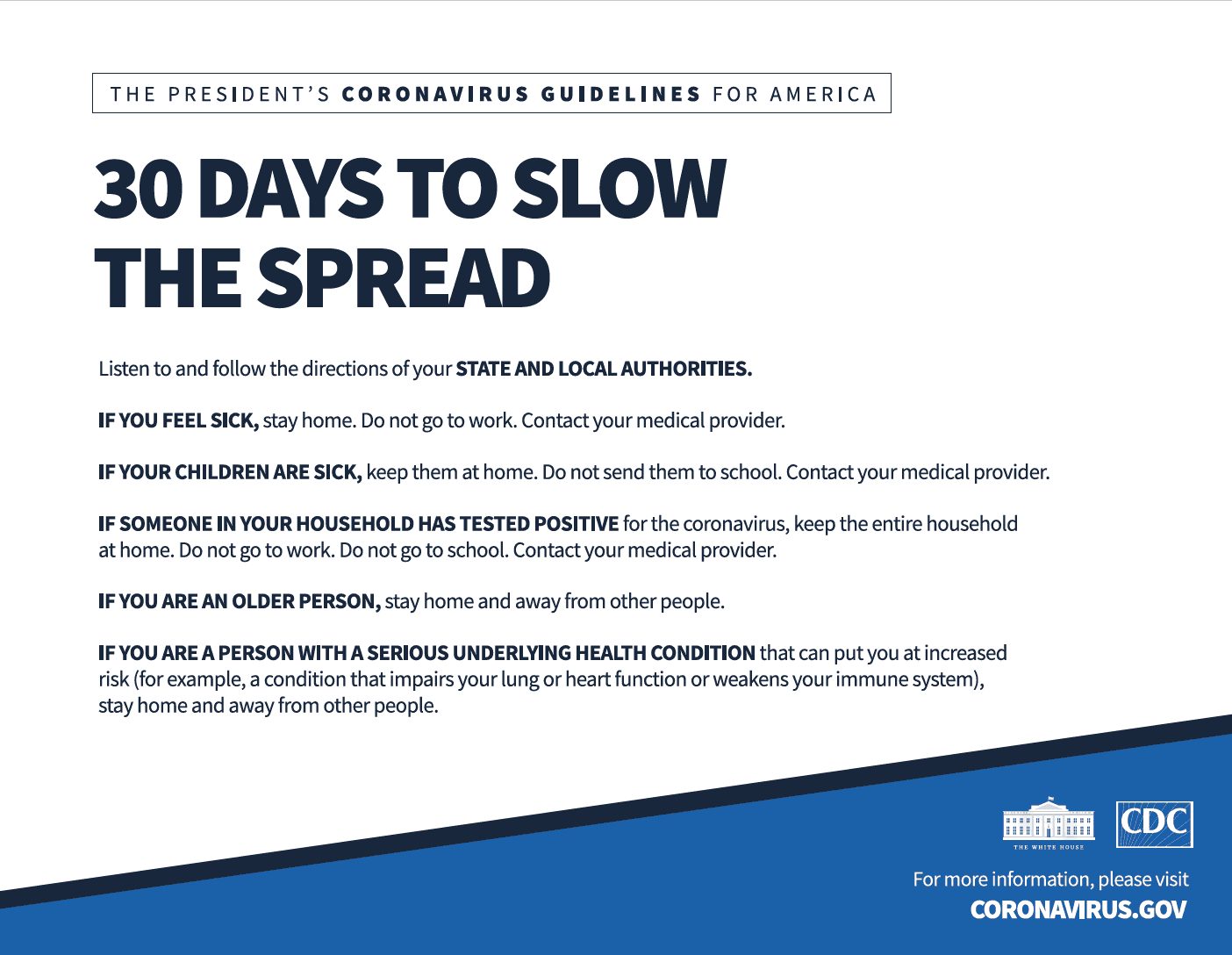
The guidelines were announced on 16 March 2020 for 15 days. On 29 March they were extended through 30 April under the name 30 Days to Slow the Spread, 46 days in all.

The 15 Days to Slow the Spread guidelines sheet The 30 Days to Slow the Spread guidelines sheet
The White House guideline sheet. The 30-day version replaced the original 13 days after it was issued.
06

The six-foot rule

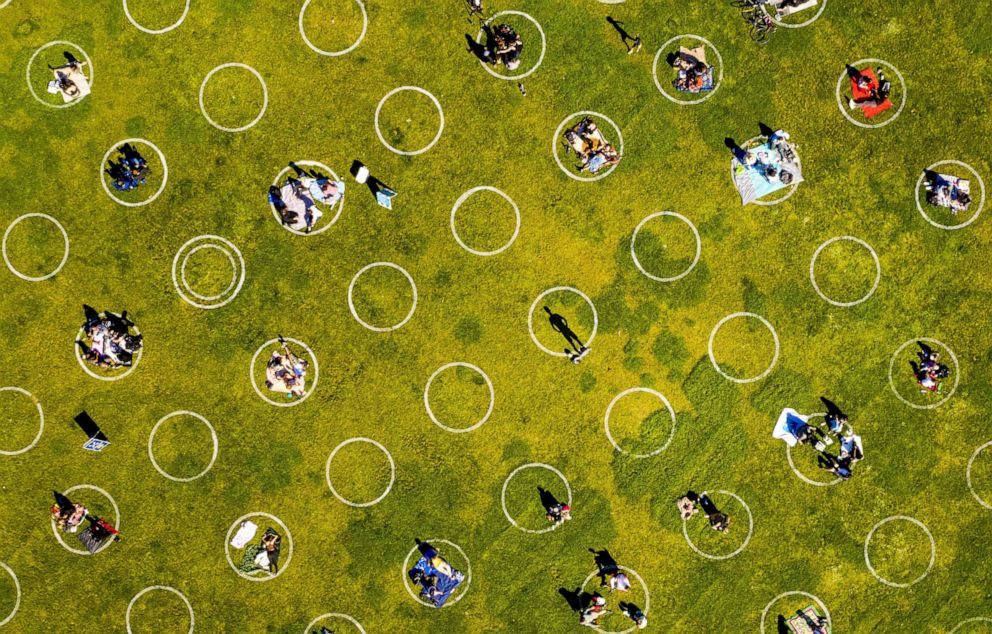
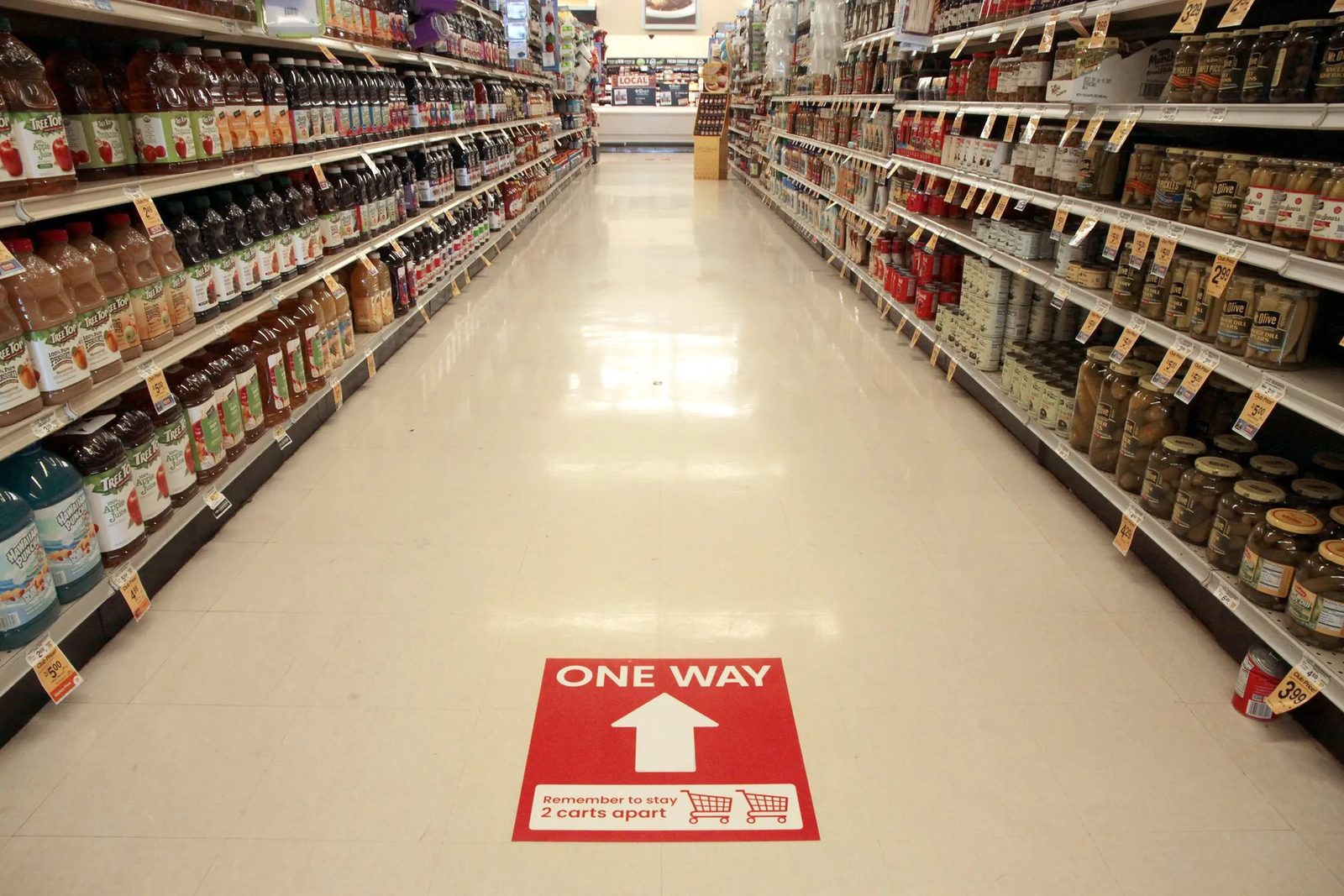
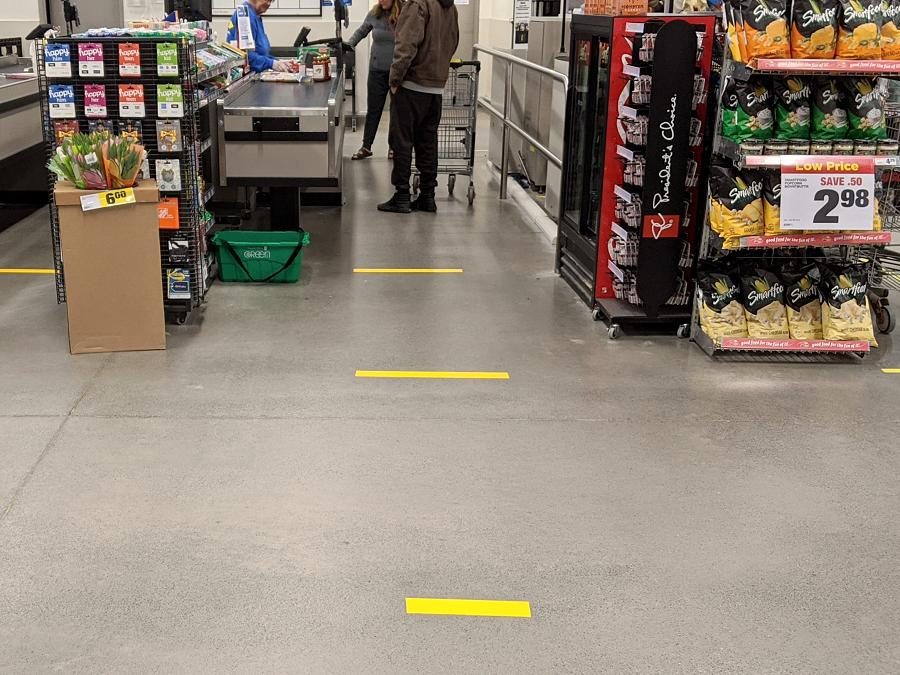
The distance that reorganised shops, schools and offices was a judgment call. It drew on old research about respiratory droplets, and it was never tested against other distances in a trial.

Centers for Disease Control and PreventionThe agency that issued the six-foot guidance and, later, the three-foot guidance for schools.

3 ftCDC for schools, March 2021 1 mWHO minimum 6 ftCDC, 2020
Documented

Where the number came from

Studies from the 1930s onward found that larger respiratory droplets fall within about three to six feet. The CDC chose the cautious end. The WHO advised at least one metre.

Documented

No study picked six feet

In a January 2024 interview with House investigators, Fauci said he was not aware of studies supporting six feet specifically. Former NIH director Francis Collins said the same.

Documented

It was later cut in half for schools

In March 2021 the CDC said three feet was enough between masked students, after studies found no difference in school case rates.

Disputed

Whether distance helped at all

Keeping apart does reduce exposure to droplets. But the virus also spreads in fine aerosols that linger and travel across a room, so ventilation and time indoors matter more than a fixed line on the floor.

“It sort of just appeared.”

Anthony Fauci, on the six-foot recommendation, in a transcribed interview with the House Select Subcommittee on the Coronavirus Pandemic, January 2024
07

Lockdowns, state by state

There was never a national lockdown in the United States. Stay-at-home orders came from governors, mayors and county officials, and they varied widely in length and strictness.

7 April 2020

43of 51 under a statewide stay-at-home order
(50 states and D.C.)

Statewide order in effect Order not yet in effect Partial or local only No order

Drag the slider to move through the spring of 2020, or select a state to see when its order took effect.

  • 19 March 2020

    California issues the first statewide order. By early April roughly nine in ten Americans are under one.

  • 22 million jobs

    Lost in March and April 2020. Unemployment reaches 14.8 percent, the highest since records began in 1948.

  • About 200,000 extra business closures

    Federal Reserve economists estimate that many more establishments shut permanently in the first year than in a normal year.

  • Largest drop in test scores on record

    Maths scores for nine-year-olds fell seven points between 2020 and 2022, the first decline in the history of the national long-term assessment. Reading fell five points.

  • Did they save lives?

    Disputed Early studies credited the orders with averting many infections. Later reviews found smaller effects and argue that people had already begun staying home on their own. Researchers still disagree on the size of the benefit and the cost.

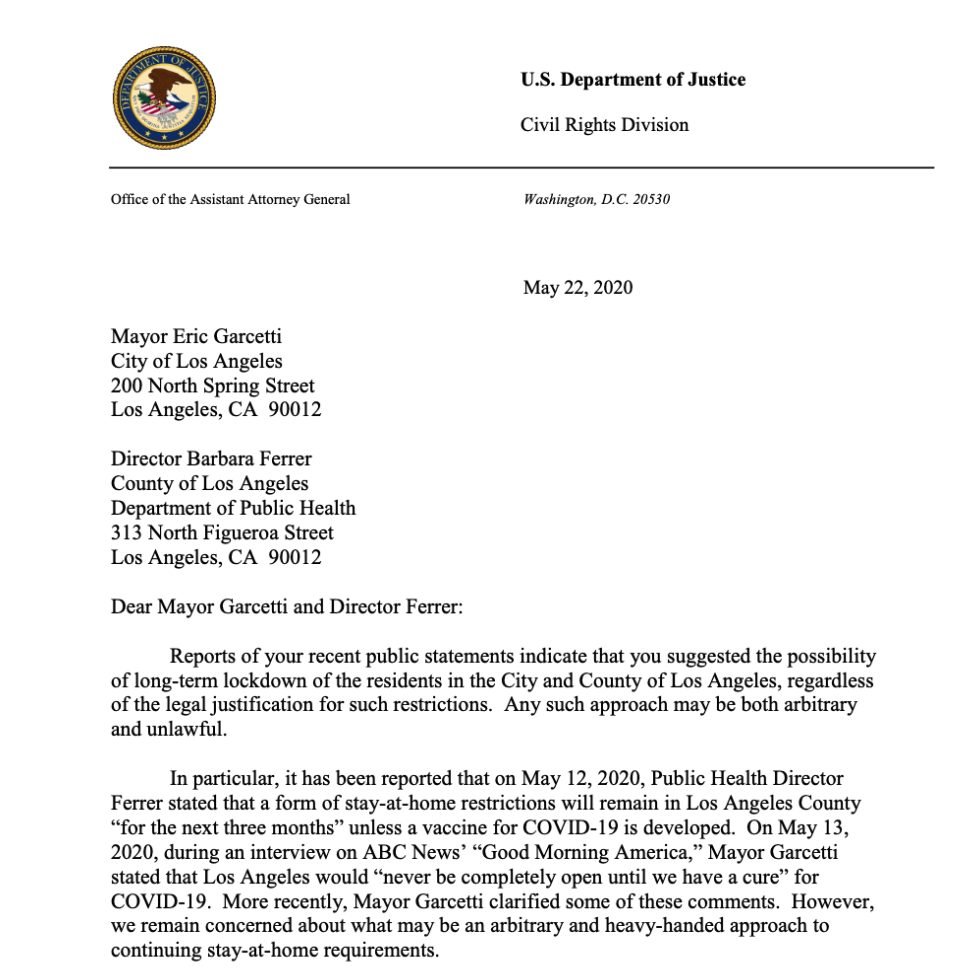
U.S. Department of JusticeIts Civil Rights Division wrote the 22 May 2020 letter shown below, warning Los Angeles officials about an open-ended stay-at-home order.

State classifications follow contemporaneous trackers from the New York Times and KFF, April 2020.

08

Vaccines, treatments and passports

The vaccines arrived in record time and cut deaths sharply. They also came with real side effects, claims that outran the evidence, and rules about proof of vaccination that divided the country.

Pfizer-BioNTech

Trial size
About 44,000 people
Efficacy against symptomatic illness
95%Against the original strain
Emergency authorisation
11 December 2020
Full FDA approval
23 August 2021

Moderna

Trial size
About 30,000 people
Efficacy against symptomatic illness
94%Against the original strain
Emergency authorisation
18 December 2020
Full FDA approval
31 January 2022
Documented

The trials did not test transmission

The original trials measured whether vaccinated people got sick, not whether they could pass the virus on. A Pfizer executive confirmed this to the European Parliament in October 2022.

Documented

The 2022 boosters and the mice

The FDA authorised the updated Omicron BA.4/5 boosters on 31 August 2022 before human trial results for that formula existed. It relied on human data from a closely related booster and on mouse studies; Pfizer's BA.4/5 data came from eight mice. Human results followed later.

Documented

Myocarditis is a real, rare side effect

The FDA added a heart-inflammation warning to both mRNA vaccines in June 2021. Risk is highest in young men after the second dose: roughly 100 cases per million among males aged 16 to 17. Most cases were mild and resolved. Infection itself also raises the risk.

Documented

Some countries restricted Moderna

In October 2021 Sweden, Denmark and Finland paused Moderna's vaccine for younger people over the myocarditis signal. In the U.S., the Johnson & Johnson shot was paused in April 2021 and later limited over rare blood clots.

Ivermectin

  • A real human medicine

    Ivermectin is an approved antiparasitic drug whose discovery won a Nobel Prize in 2015. It is also used in animals, which is where the “horse dewormer” label came from.

  • Why people hoped

    An April 2020 lab study found it stopped the virus in cell cultures, at concentrations far higher than a normal dose reaches in the body. An influential early study reporting large benefits was withdrawn in 2021 over problems with its data.

  • What the large trials found

    Unsupported Three large randomised trials (TOGETHER, ACTIV-6 and PRINCIPLE) found it did not meaningfully reduce hospitalisation or speed recovery from COVID-19.

  • The FDA's “you are not a horse” post

    Documented Doctors sued over the agency's 2021 messaging. In March 2024 the FDA settled and agreed to take the posts down.

Vaccine passports and mandates

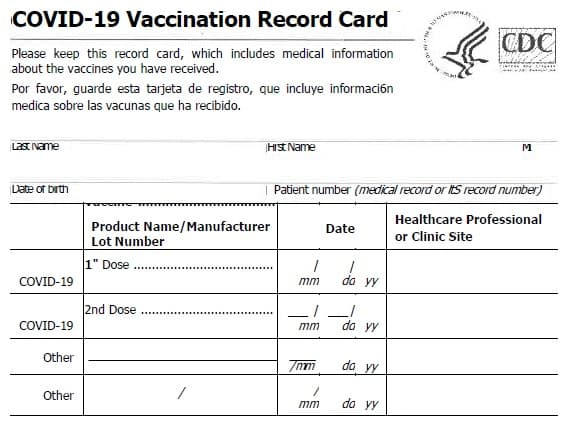
Issued by the CDCThe record card handed out with every dose.

A blank CDC COVID-19 Vaccination Record Card
The CDC vaccination record card. It was a paper record of doses, and it became the most common proof of vaccination in the U.S.
  • No national passport

    The federal government never created a vaccine passport or a national vaccination database. Proof-of-vaccination rules came from cities, states, employers and other countries.

  • Where proof was required

    New York City required it for indoor dining, gyms and entertainment from August 2021 to March 2022. The European Union ran a digital certificate from July 2021 to June 2023. About twenty U.S. states banned such requirements.

  • The mandates in court

    In January 2022 the Supreme Court blocked the vaccine-or-test rule for large employers and upheld the one for health workers. The military's mandate was rescinded in January 2023 after about 8,000 service members had been discharged.

  • Did passports work?

    Disputed Studies found they raised vaccination rates in some countries. Once Omicron spread readily among vaccinated people, the case that they reduced transmission weakened.

09

The numbers

Official counts understate the toll, because many deaths were never tested or recorded. Excess-death estimates compare all deaths with what would have been expected.

7.1 million

Deaths reported to the WHO

Confirmed COVID-19 deaths worldwide, from more than 775 million reported cases.

14.9 million

Estimated excess deaths, 2020–21

The WHO's estimate for the first two years alone, with a range of 13.3 to 16.6 million.

1.2 million

U.S. deaths

COVID-19 listed on the death certificate, per the CDC.

2.4 years

Fall in U.S. life expectancy

From 78.8 in 2019 to 76.4 in 2021, the lowest since 1996.

13.6 billion

Vaccine doses given

Worldwide, the largest vaccination campaign in history.

14.4 million

Deaths averted by vaccines in year one

A modelling estimate published in The Lancet Infectious Diseases in 2022. It is a model, not a count.

11 months

Sequence to first authorised vaccine

January to December 2020. The previous record for a new vaccine was about four years.

$4.6 trillion

U.S. federal relief

Across six laws passed in 2020 and 2021, per the Government Accountability Office.

U.S. unemployment rate

Percent of the labour force, monthly, January 2020 to December 2021. Hover or use the arrow keys to read a month.

View as a table

Source: Bureau of Labor Statistics, seasonally adjusted.

U.S. COVID-19 deaths by year

Deaths with COVID-19 as the underlying cause, in thousands.

View as a table

Source: CDC, National Center for Health Statistics. The 1.2 million figure above also counts deaths where COVID-19 was a contributing cause.

U.S. life expectancy at birth

Years. The scale starts at 75 to show the change.

View as a table

Source: CDC, National Center for Health Statistics.

10

The CARES Act

Signed on 27 March 2020 after passing the Senate 96 to 0. At about $2.2 trillion it was more than twice the size of the 2009 stimulus. Here is roughly where it went.

Category totals are rounded and follow NPR's analysis of the bill text; they do not sum exactly to the headline figure.

Where the CARES Act money went

Billions of dollars by category. Hover or tab to a bar for detail.

View as a table

Source: NPR analysis of the bill text. Rounded.

How the CARES Act compares

Headline cost of major U.S. relief laws, in trillions of dollars, not adjusted for inflation.

View as a table

Sources: Congressional Budget Office estimates and the laws as enacted. Rounded.

Documented

Fraud was large

The Small Business Administration's inspector general estimated in 2023 that more than $200 billion in pandemic business loans may have gone to fraudulent applicants. The GAO puts unemployment-benefit fraud at $100 to $135 billion.

Documented

Poverty fell anyway

Counting relief payments, the Census Bureau's supplemental poverty rate dropped to 9.2 percent in 2020 and a record-low 7.8 percent in 2021, despite the job losses.

Disputed

How much it fed inflation

Most economists agree the scale of relief added to the 2021–22 price surge. Estimates of how much differ widely, since supply shortages and energy prices pushed in the same direction.

11

Claim check

Things people say about the pandemic, and how each holds up.

Disputed“U.S. intelligence concluded it was a lab leak.”

Three agencies lean that way, two of them with low confidence. Five bodies lean toward natural exposure, also with low confidence, and one is undecided. No agency claims to know.

Unsupported“COVID came from Ralph Baric's lab in North Carolina.”

This is raised as a possibility, including by former CDC director Robert Redfield, because Baric's UNC lab is a leader in coronavirus research and had collaborated with Wuhan scientists. But no public evidence shows the virus was created in or leaked from North Carolina, the earliest known cases were in Wuhan, and no intelligence assessment or congressional report points there. Baric denies it.

Disputed“The Proximal Origin paper was a cover-up.”

It is documented that the authors privately took a lab origin seriously just before writing a paper that dismissed it, and that Fauci and Collins were involved in the discussions that led to it. Whether that amounts to a cover-up is contested: the authors say the evidence changed their minds, and no record shows they were told what to write.

Documented“Officials told people not to wear masks, then reversed.”

True. The Surgeon General and others discouraged public mask use in February and March 2020, partly to protect supplies for hospitals. The CDC recommended face coverings on 3 April 2020.

Disputed“The six-foot rule had no scientific basis.”

Half right. It was grounded in decades-old droplet research, so it was not invented from nothing. But no study tested six feet against other distances, and the officials responsible have said so under oath.

Unsupported“The federal government locked down the country.”

Federal guidelines were voluntary. Binding orders came from states and localities, and five states never issued one.

Documented“Fifteen days turned into much longer.”

The federal guidelines were extended from 15 days to more than six weeks. Many state orders ran into May or June 2020, and some restrictions on schools and businesses lasted more than a year.

Unsupported“COVID deaths were heavily overcounted.”

Total deaths from all causes rose by more than the number attributed to COVID-19, in the U.S. and worldwide. That points to undercounting, not overcounting.

Unsupported“Ivermectin treats COVID-19.”

It worked against the virus in a lab dish at very high concentrations, and some early small studies looked promising. The large randomised trials that followed found no meaningful benefit. It is a legitimate human medicine for parasites, not only an animal drug.

Documented“The updated boosters were only tested on mice.”

Largely true of the BA.4/5 formula at the time it was authorised in August 2022: the human data came from a closely related booster, and the data on the exact formula came from mice. Regulators compared it to the yearly flu-shot update. Human studies were published afterwards.

Documented“The mRNA vaccines can cause myocarditis.”

Yes, rarely. The risk is concentrated in teenage boys and young men after the second dose, and most cases resolved. Regulators judged that the benefits outweighed the risk, though several countries restricted Moderna for the young.

Unsupported“The vaccines stopped transmission.”

Some officials said this in early 2021, and it did not hold. Protection against infection faded within months, especially once Omicron arrived. Protection against severe illness and death lasted much longer and is well established.

Documented“School closures set children back.”

National test scores fell by record amounts between 2020 and 2022, with the steepest drops among lower-performing students. Districts that stayed remote longer generally lost more ground.

Documented“Billions in relief money was stolen.”

Federal watchdogs estimate fraud in the hundreds of billions of dollars across business loans and unemployment benefits. Only a small share has been recovered.
12

Documents

Primary records, readable in full on this page. Pick a document, then turn pages by selecting a page edge, dragging the slider, or pressing the arrow keys.

Choose a document

Open the PDF